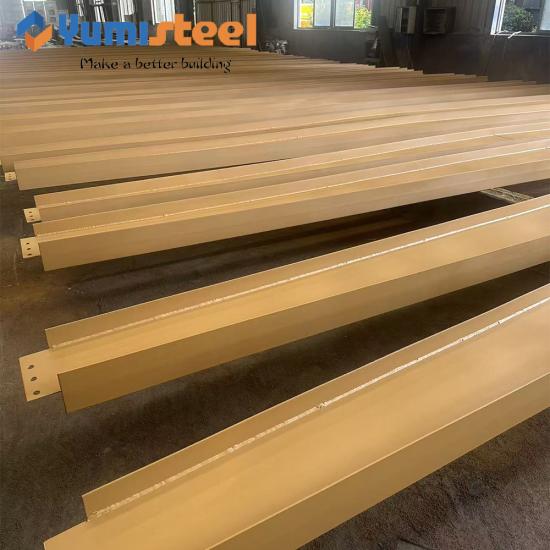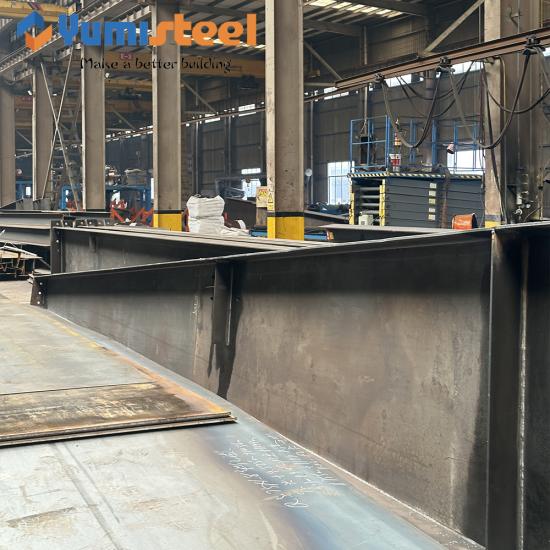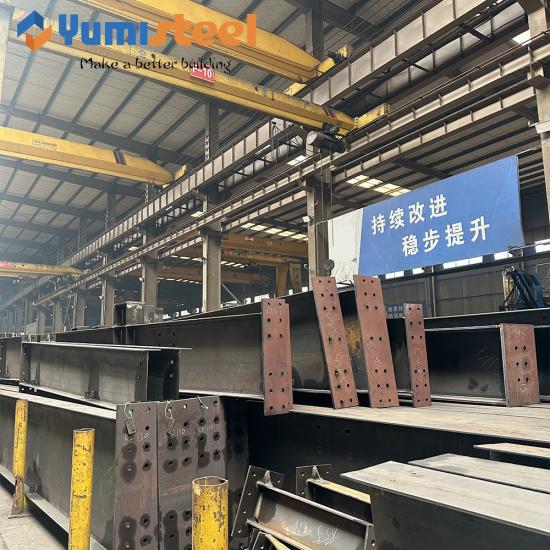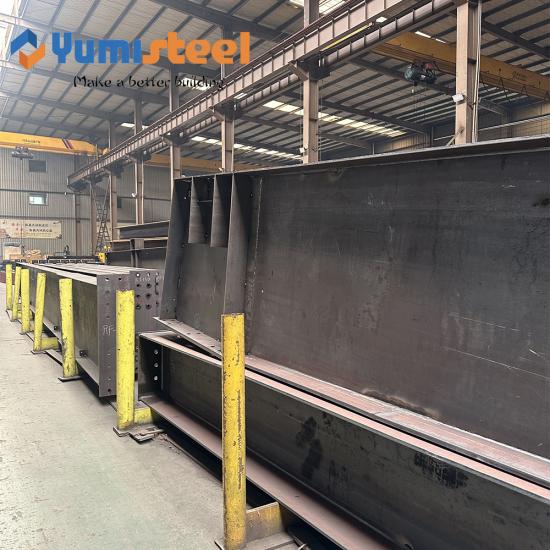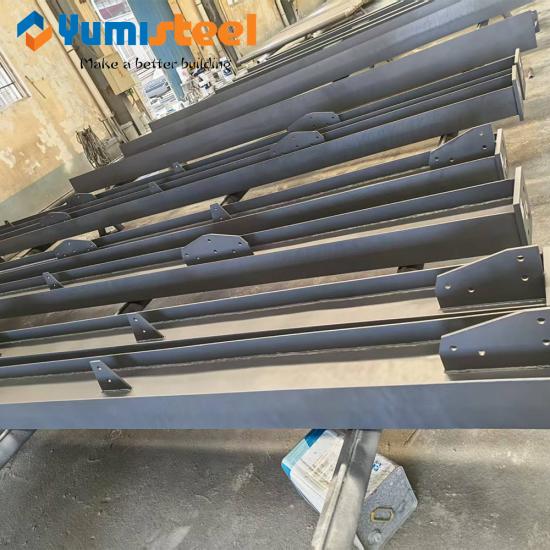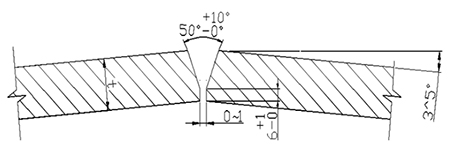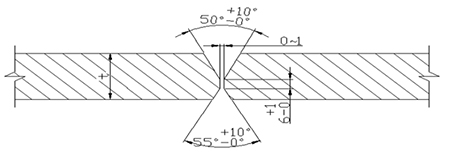

O processo de "emenda de painéis" na produção de estruturas metálicas é uma etapa crucial na montagem de chapas de aço para formar componentes com as dimensões necessárias, através de emendas e soldagem. Como as chapas de aço provenientes das siderúrgicas geralmente têm comprimento e largura limitados, elas não atendem diretamente às dimensões de corte de grandes vigas H, colunas caixão e outros componentes. Portanto, as chapas de flange e as chapas da alma devem ser soldadas topo a topo na oficina para formar um material base completo. A qualidade da emenda de painéis afeta diretamente a resistência geral, a precisão da instalação e a segurança estrutural dos componentes, tornando-se um dos processos essenciais que devem ser rigorosamente controlados na fabricação de estruturas metálicas.
Tipos de emenda de painéis
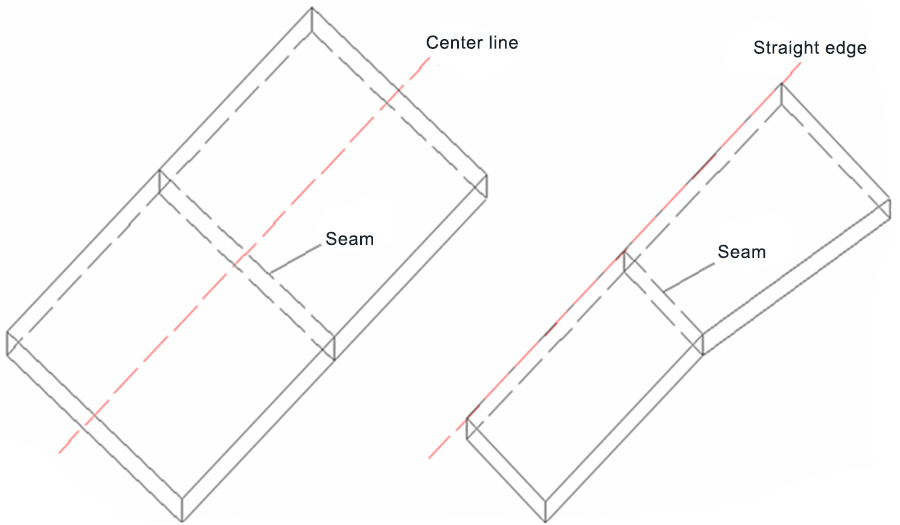
Na emenda de painéis de estrutura metálica, existem principalmente dois tipos: emenda de chapas de flange e emenda de chapas de alma. Como existem duas soldas de filete de suporte de carga na conexão entre a chapa de flange e a chapa de alma, as especificações exigem que as juntas de emenda longitudinais não sejam permitidas para as chapas de flange; a emenda é permitida apenas na direção longitudinal. As chapas de alma, por outro lado, podem ser emendadas tanto na direção longitudinal quanto na transversal, e as juntas de emenda podem ter formato de cruz ou em T, dependendo dos requisitos de arranjo do painel. Compreender claramente as diferentes regras de emenda para esses dois tipos de componentes é um pré-requisito para um arranjo de painel adequado e para evitar a concentração de tensões.
Operações de emenda de painéis
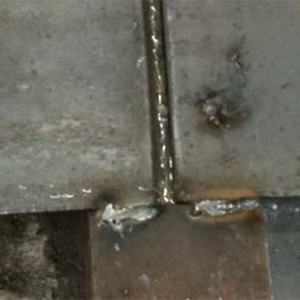
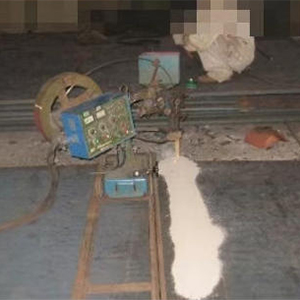
A montagem de chapas utiliza principalmente soldagem a arco submerso para uma união de topo eficiente. Antes da soldagem, óleo, ferrugem e outras impurezas devem ser completamente removidas do chanfro e da área em um raio de 30 mm em ambos os lados para garantir que a folga de montagem e as dimensões do chanfro atendam às especificações do processo. Simultaneamente, a corrente de soldagem, a tensão do arco e a velocidade de soldagem apropriadas são selecionadas com base na espessura da chapa. Para chapas de espessura média, um processo híbrido é frequentemente utilizado, empregando soldagem com proteção gasosa de CO₂ para o passe de raiz, soldagem a arco submerso para o passe de enchimento na face frontal e soldagem a arco submerso de alta corrente para o cordão de solda final, a fim de garantir penetração completa e boa formação da solda.
|
|
|
|
|
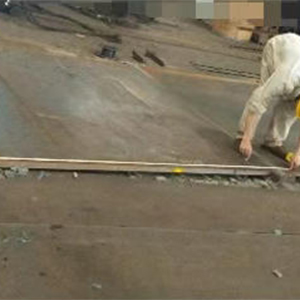
Marcação |
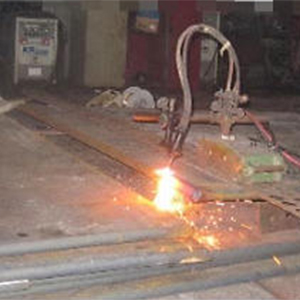
Sulco |
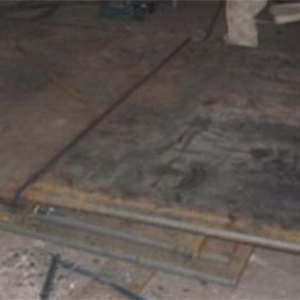
Conjunto |
|
|
|
|
|
Anexar execução ligado e funcionando abas desativadas |
solda de reforço |
Soldagem por arco submerso |
Pontos-chave para a montagem da placa
Há três pontos-chave a considerar na montagem dos painéis:
Primeiramente, controle a posição das juntas de emenda. As juntas de emenda dos flanges e das almas devem ser escalonadas em mais de 200 mm para evitar interseções e concentrações de solda.
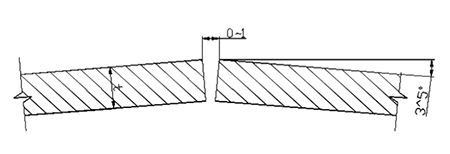
Em segundo lugar, controle a deformação da soldagem. Durante a montagem, utilize grampos para fixar firmemente as chapas de aço e empregue soldagem segmentada simétrica ou soldagem intermitente em sequência. Componentes longos também requerem nivelamento com uma linha guia.
Em terceiro lugar, deve-se levar em consideração a contração da solda durante o traçado. Normalmente, deve-se prever uma contração de 20 a 30 mm para cada solda e de 2 a 3 mm para as juntas de corte, para garantir que as dimensões finais do componente atendam aos requisitos do projeto.
|
Tabela de seleção de ranhuras para soldagem de chapas de aço |
||
|
Espessura da chapa de aço |
Ranhura de soldagem |
Observações |
|
t ≤ 16 |
|
Antideformação predefinida |
|
16 |
|
Antideformação predefinida |
|
t > 30 |
|
Pré-aqueça de acordo com a qualificação do procedimento de soldagem pertinente. |
1. Para chapas de aço com espessura ≤16mm, não é necessário chanfrar; utiliza-se soldagem direta por arco submerso.
Para chapas com espessura superior a 16 mm, é necessário chanfrar; utiliza-se soldagem com proteção gasosa para o passe de raiz, seguida de soldagem a arco submerso para os passes de enchimento e acabamento.
2. Instale uma placa de ignição e extinção de arco. A soldabilidade deve ser igual ou superior à do metal base. O chanfro deve ser igual ao do metal base, com comprimento ≥ 50 mm.
3. O pré-aquecimento deve ser realizado de acordo com o material a ser soldado e a temperatura ambiente. A temperatura mínima de pré-aquecimento para aços comumente utilizados é mostrada na tabela abaixo.
Temperatura ambiente: -10°C a 0°C, pré-aqueça a uma temperatura acima de 20°C; se a temperatura mínima de pré-aquecimento for superior a 20°C, utilize a temperatura de pré-aquecimento mais alta.
Âmbito de aplicação: Área de soldagem ≥ 2t (espessura da chapa t) e > 100mm.
|
Material |
Espessura t (mm) de placas mais espessas |
|||
|
t≤20 |
20 |
40 |
60 |
|
|
Q235 |
/ |
/ |
40°C |
50°C |
|
Q345 |
/ |
2 0°C |
60°C |
80°C |
Inspeção de montagem de painéis
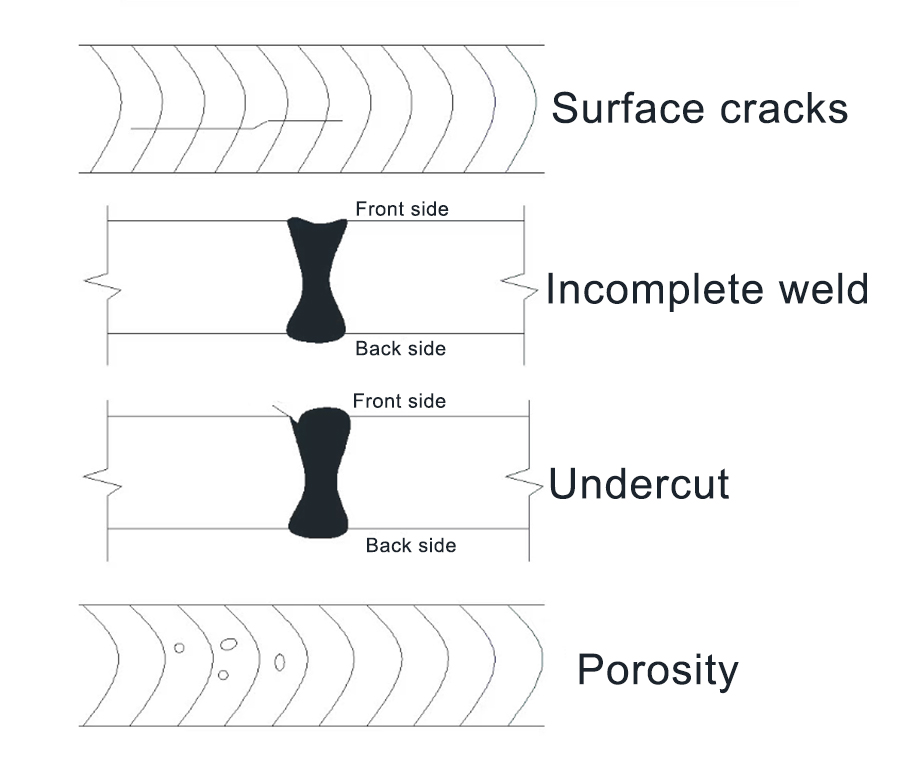
Após a montagem, é necessária uma inspeção rigorosa. A inspeção visual verifica principalmente o reforço da solda, mordeduras, porosidade e trincas superficiais. Durante a inspeção visual, a distância entre os olhos e a superfície inspecionada não deve exceder 600 mm e a luminosidade não deve ser inferior a 160 lx. A qualidade interna é avaliada por meio de ensaio ultrassônico não destrutivo. Todas as soldas de Classe I e Classe II devem ser inspecionadas. Os procedimentos de ensaio e a avaliação de defeitos devem estar em conformidade com a norma GB/T 11345 para garantir que as soldas estejam isentas de defeitos como fusão incompleta, penetração incompleta e trincas.
 A montagem de painéis é um processo fundamental na fabricação de estruturas de aço, e seu nível tecnológico determina diretamente o ponto de partida para a qualidade da montagem e soldagem subsequentes. Somente por meio de um controle meticuloso em quatro níveis é possível garantir a qualidade.
regras de disposição de painéis, especificações de trabalho, pontos-chave do processo e padrões de inspeção
É possível garantir a capacidade de carga e a vida útil dos componentes de aço desde a sua origem, construindo assim uma sólida primeira linha de defesa para a segurança estrutural geral?
A montagem de painéis é um processo fundamental na fabricação de estruturas de aço, e seu nível tecnológico determina diretamente o ponto de partida para a qualidade da montagem e soldagem subsequentes. Somente por meio de um controle meticuloso em quatro níveis é possível garantir a qualidade.
regras de disposição de painéis, especificações de trabalho, pontos-chave do processo e padrões de inspeção
É possível garantir a capacidade de carga e a vida útil dos componentes de aço desde a sua origem, construindo assim uma sólida primeira linha de defesa para a segurança estrutural geral?
Para obter mais informações ou esclarecer quaisquer dúvidas, entre em contato com a equipe da Yumisteel.
anos de experiência



 serviço on-line
 +86-592-6095031
 manager@yumisteel.com
 Alina_Yuki
 +8613559086380+8615860744964
 português
 English
 русский
 español
 日本語
日本語