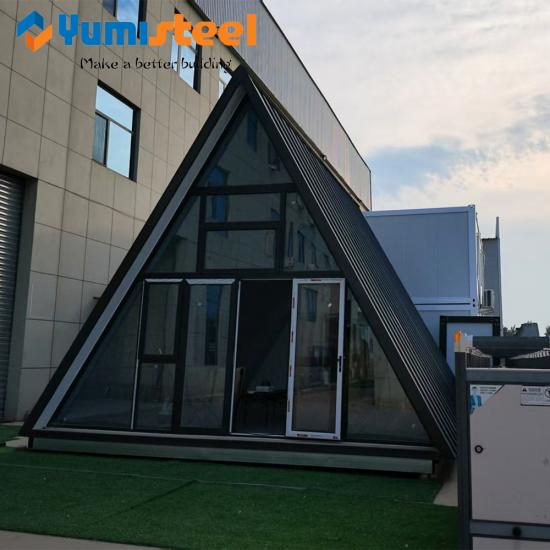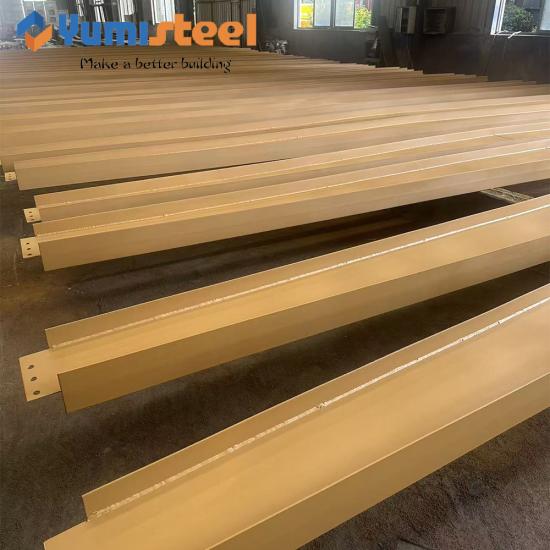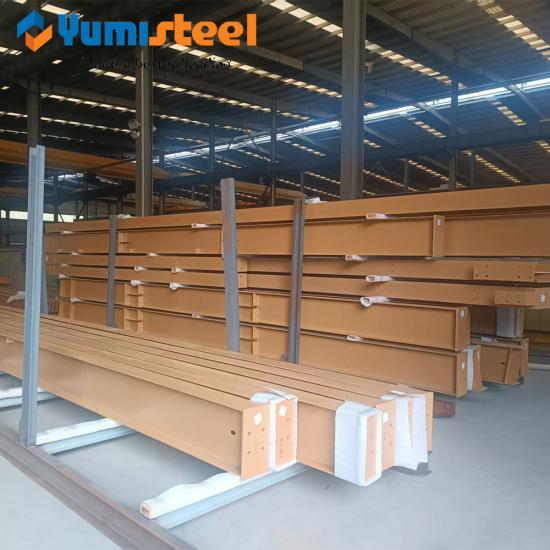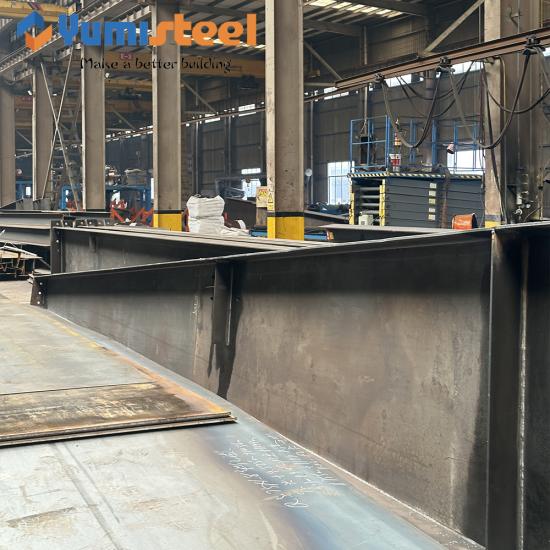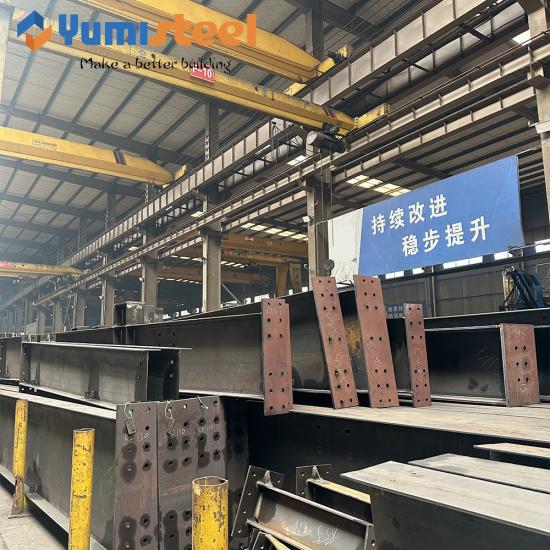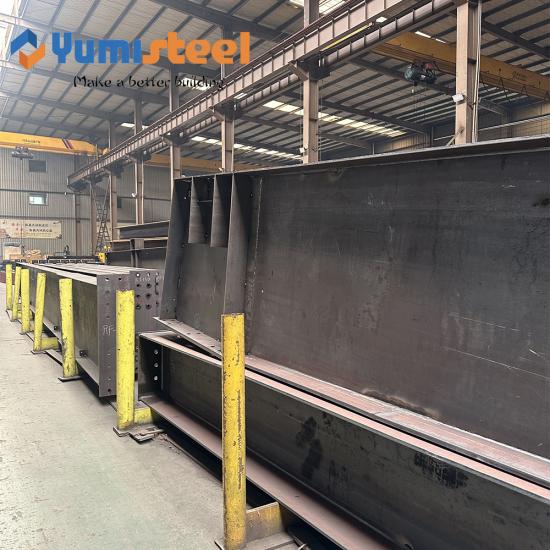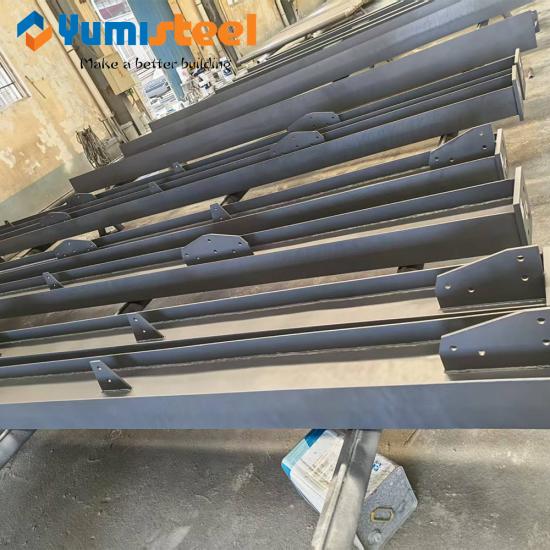

A viga H recebe esse nome devido à sua seção transversal em forma de H. Comparada às vigas I tradicionais, ela possui flanges mais largas e um perfil mais uniforme, oferecendo maior resistência à flexão, ao cisalhamento e à carga. Essa estrutura sustenta arranha-céus, pontes de grande vão, plataformas para equipamentos pesados e até mesmo casas pré-fabricadas em contêineres. Sem as vigas H, muitos projetos de edifícios altos, grandes vãos e cargas pesadas permaneceriam apenas no papel. As vigas H não são apenas um componente essencial das estruturas de aço, mas também um indicador-chave de eficiência estrutural e controle de custos. Compreendê-las significa compreender os fundamentos da construção moderna em aço.
O que é uma viga H?
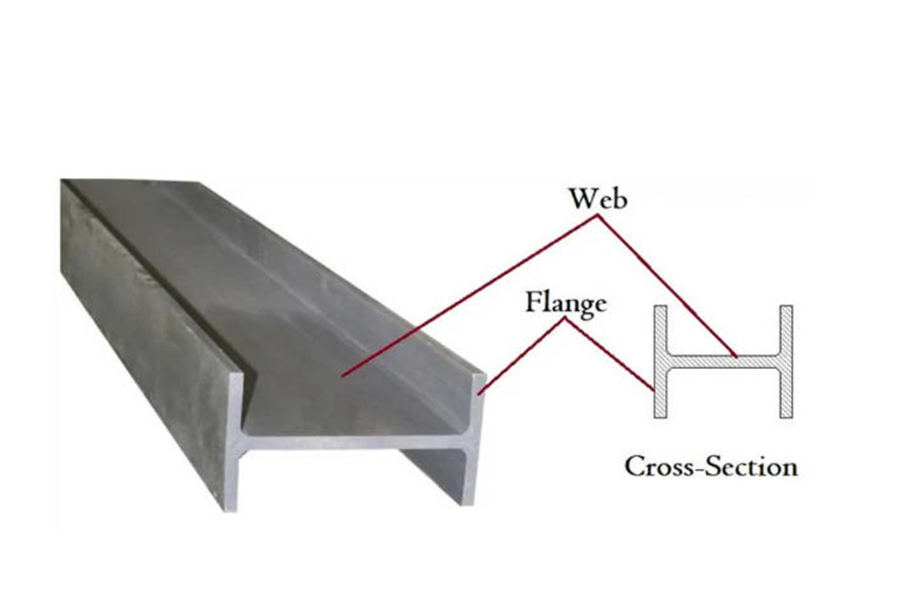
UM Viga H Também conhecida como viga de abas largas, a viga H é um tipo de viga estrutural de aço com seção transversal em forma de "H". Ela possui duas abas largas e paralelas conectadas por uma alma vertical, o que lhe confere alta relação resistência/peso, excelente capacidade de carga e forte resistência à flexão e ao cisalhamento. As vigas H são amplamente utilizadas na construção moderna, incluindo edifícios altos, pontes, plantas industriais e casas pré-fabricadas em contêineres.
Qual é a estrutura de uma viga H?
A estrutura de uma viga H consiste em três partes principais: duas flanges paralelas e uma alma vertical. Quando vista em corte transversal, a viga forma o desenho da letra maiúscula "H".
Flanges – As placas horizontais superior e inferior. São largas e de espessura igual, proporcionando alta resistência à flexão e suportando cargas pesadas.
Web – A placa vertical que conecta as duas flanges. Ela transfere as forças de cisalhamento e mantém a distância entre as flanges.
As flanges e a alma são geralmente soldadas ou laminadas em uma única peça. Comparadas às vigas I, as vigas H possuem flanges mais largas e uma relação mais uniforme entre a espessura da flange e da alma, o que lhes confere maior estabilidade e melhor distribuição de carga. Essa estrutura simples, porém eficiente, torna as vigas H ideais para edifícios altos, pontes, instalações industriais e casas pré-fabricadas em contêineres.
Comparação com outros tipos de vigas
Vigas H, vigas I, vigas W, vigas S, vigas em forma de caixa e vigas T.
|
Parâmetro |
Viga H |
Viga I |
Viga W |
Viga em S |
Caixa Feixe |
Viga em T |
|
Forma |
em forma de H |
em forma de I |
flange larga |
Flange padrão |
Em forma de caixa |
em forma de T |
|
Carregar |
Alto |
Moderado |
Alto |
Moderado |
Alta torção |
Moderado |
|
Peso |
Pesado |
Luz |
Moderado |
Luz |
Pesado |
Moderado |
|
Span |
Até 330 pés |
33-100 pés |
Varia |
Pequeno |
Curto |
Curto |
|
Flanges |
Largo, grosso |
Estreito, fino |
Largo, paralelo |
Afilado |
Em anexo |
Flange simples |
|
Web |
Espesso |
Afinar |
Espesso |
Afilado |
Em anexo |
Afinar |
|
Usar |
Grandes edifícios |
Colunas de suporte |
Pontes |
Construção naval
|
Guindastes
|
Lajes de concreto |
Em resumo, as vigas H são um pilar da construção moderna devido ao seu design eficiente em forma de H e às suas excelentes propriedades mecânicas. Elas sustentam arranha-céus, pontes, grandes fábricas e casas pré-fabricadas em contêineres, oferecendo alta resistência à flexão, distribuição uniforme de tensões e excelente custo-benefício. Mais do que apenas aço, as vigas H representam um equilíbrio inteligente entre eficiência estrutural e economia. À medida que buscamos construções rápidas, grandes vãos e cargas pesadas, as vigas H continuarão desempenhando um papel insubstituível, sustentando não apenas edifícios, mas também as infinitas possibilidades da indústria moderna e do crescimento urbano.
Para obter mais informações ou esclarecer quaisquer dúvidas, entre em contato com a equipe da Yumisteel.
anos de experiência



 serviço on-line
 +86-592-6095031
 manager@yumisteel.com
 Alina_Yuki
 +8613559086380+8615860744964
 português
 English
 русский
 español
 日本語
日本語