
I. Princípios básicos de projeto
Leves rterças de cobertura(especialmente terças de aço de parede fina formadas a frio) são sensíveis às cargas de neve; elas devem ser verificadas contra o cenário mais desfavorável de distribuição não uniforme de neve, em vez de serem avaliadas apenas com base na distribuição uniforme.
II. Classificação das condições comuns desfavoráveis de carga de neve
|
Nº |
Tipo de telhado |
Características principais |
Impacto principal |
|
1 |
Telhado de duas águas de vão único |
Distribuição irregular de neve entre os lados de barlavento e sotavento |
A carga de neve em um lado é significativamente maior do que no outro |
|
2 |
Telhado de duas águas de múltiplos vãos |
Acumulação de neve no vale central |
A carga de neve no vale pode aumentar várias vezes |
|
3 |
Telhado de duas águas com platibandas |
As platibandas obstruem a neve transportada pelo vento |
Formam-se derivas de neve triangulares na base das platibandas, criando altas cargas locais |
|
4 |
Telhado de duas águas com claraboias |
As projeções das claraboias alteram o campo de vento local |
A neve se acumula acima e em ambos os lados das claraboias |
|
5 |
Telhados escalonados (acumulação de neve) |
Telhado inferior adjacente a uma parede alta |
A neve deslizando do telhado superior se acumula no telhado inferior |
|
6 |
Telhados escalonados (deriva de neve) |
A neve transportada pelo vento se acumula na base da parede alta |
Comprimento e altura significativos das derivas de neve |
|
7 |
Telhado com projeções (acumulação de neve) |
Projeções como bases de equipamentos e dutos de ventilação |
Formam-se derivas de neve locais ao redor das projeções |
III. Características de carga e considerações de projeto para várias condições
1. Telhado de duas águas de vão único
Características de carga
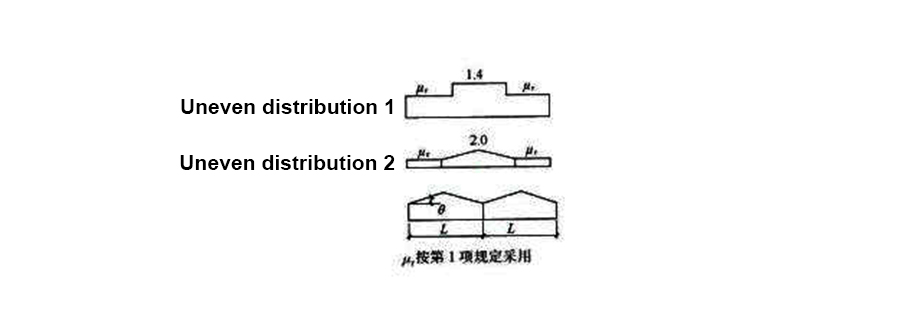
A neve é levada pelo vento do lado de barlavento e se acumula no lado de sotavento. A carga de neve no lado de sotavento é tipicamente de 1,25 a 2,0 vezes a carga de neve uniformemente distribuída (dependendo da inclinação; valores específicos são determinados de acordo com GB 50009).
Considerações de projeto
Ao verificar as terças, os cálculos não devem ser baseados apenas em uma carga de neve uniforme em todo o vão; os cenários de distribuição desfavorável para as metades esquerda e direita do vão devem ser verificados separadamente.
2. Telhado de duas águas de múltiplos vãos (dois ou mais vãos)
Características de carga
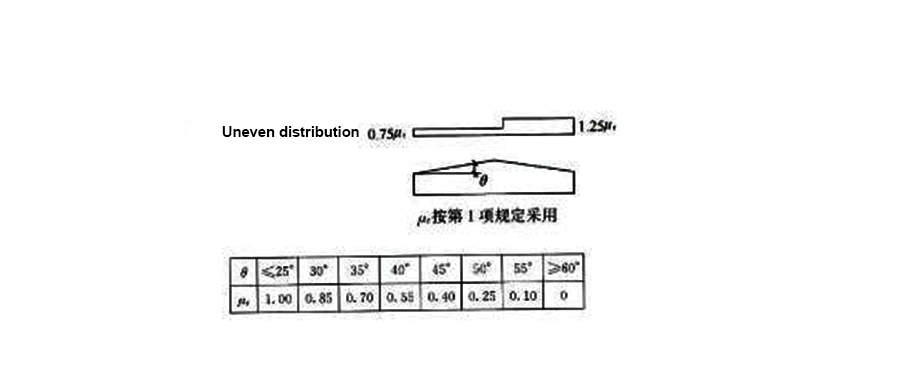
O vale côncavo onde dois vãos se encontram é a área de maior acúmulo de neve. A neve transportada pelo vento se deposita no vale, combinando-se com a neve que desliza das encostas adjacentes do telhado para formar uma zona de acumulação triangular ou trapezoidal.
Considerações de projeto
As terças próximas ao vale devem ser mais espaçadas ou ter seções transversais maiores;
O valor da carga de neve nessa área pode ser tomado como 2,0 a 2,5 vezes a pressão básica de neve (dependendo da relação entre os vãos e da direção do vento).
3. Telhado de duas águas com platibandas
Características de carga
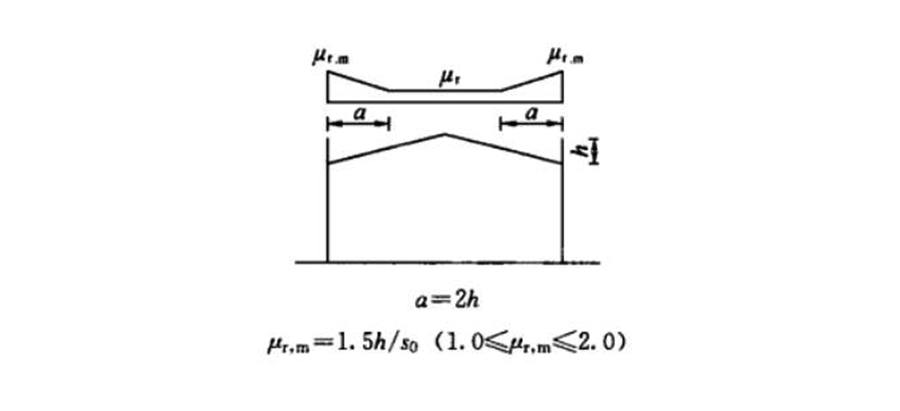
As platibandas obstruem o fluxo de ar, fazendo com que a neve se acumule na base da platibanda e forme uma deriva de neve triangular; a carga máxima ocorre na base da parede e geralmente é considerada como 2,0 × S₀ (onde S₀ é a pressão básica de neve).
Considerações de projeto
As terças dentro de um intervalo de 2 a 4 metros da platibanda requerem reforço;
O comprimento da zona de acumulação é calculado usando fórmulas padrão com base na altura da platibanda e na pressão básica de neve.
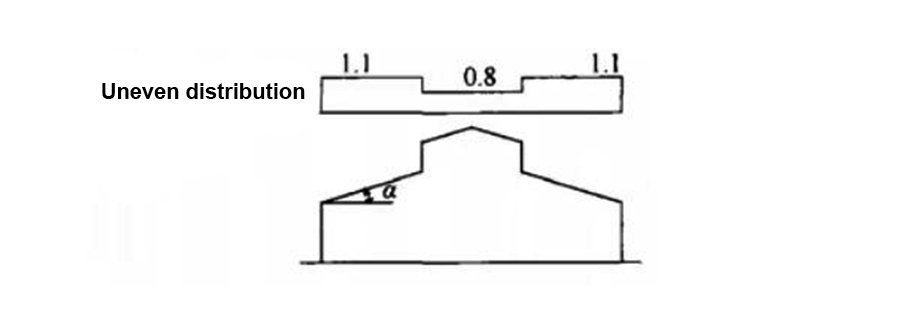
4. Telhado de duas águas com claraboias
Características de carga
As claraboias que se projetam do telhado alteram o campo de vento local, fazendo com que a neve se acumule no lado de barlavento da claraboia.
Considerações de projeto
As terças dentro de um intervalo de aproximadamente 2 a 3 metros em ambos os lados da claraboia devem ser verificadas utilizando uma carga de neve aumentada;
Se a claraboia for alta (projetando-se ≥ 1 m acima do telhado), o efeito de acumulação é mais pronunciado.
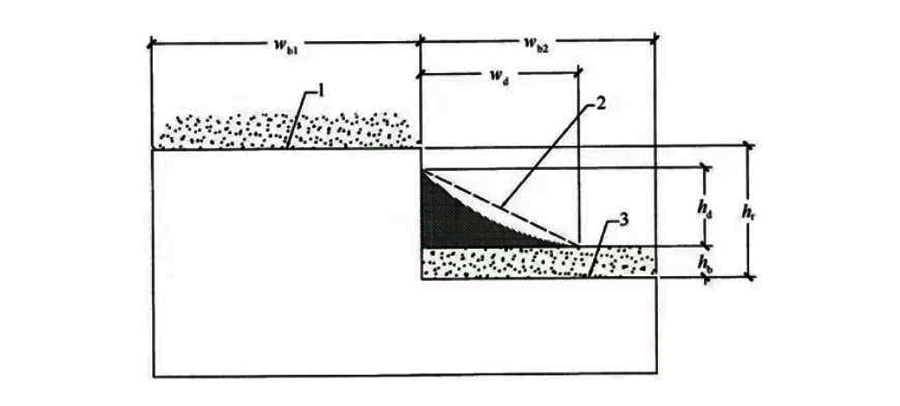
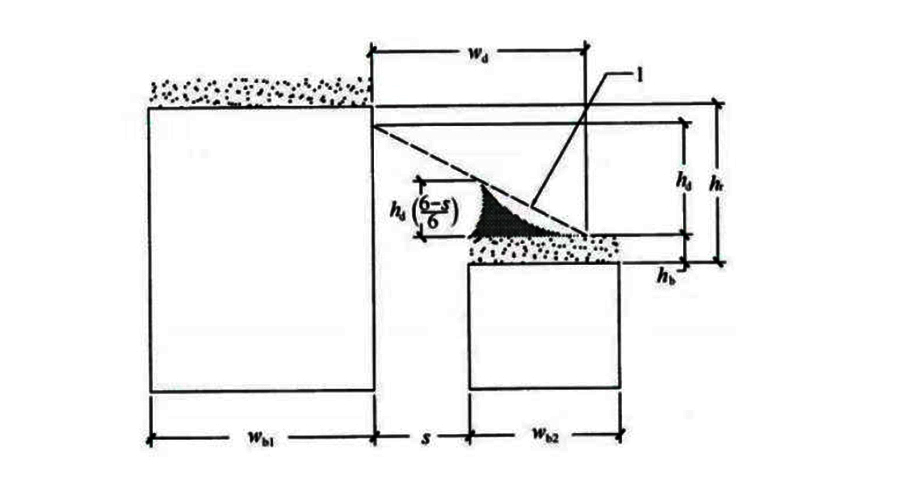
5. Acumulação de neve por deslizamento (acumulação por deslizamento)
Características da carga: a neve desliza de um telhado mais alto para um telhado mais baixo, formando uma acumulação próxima à parede alta no telhado inferior.
Considerações de projeto
O comprimento da zona de acumulação é geralmente considerado como 2 × a diferença de altura (mas não excedendo 15 m);
A carga de pico na zona de acumulação é aproximadamente 2,0 × S₀, com distribuição triangular (máximo na base da parede, reduzindo-se até zero na extremidade mais distante).
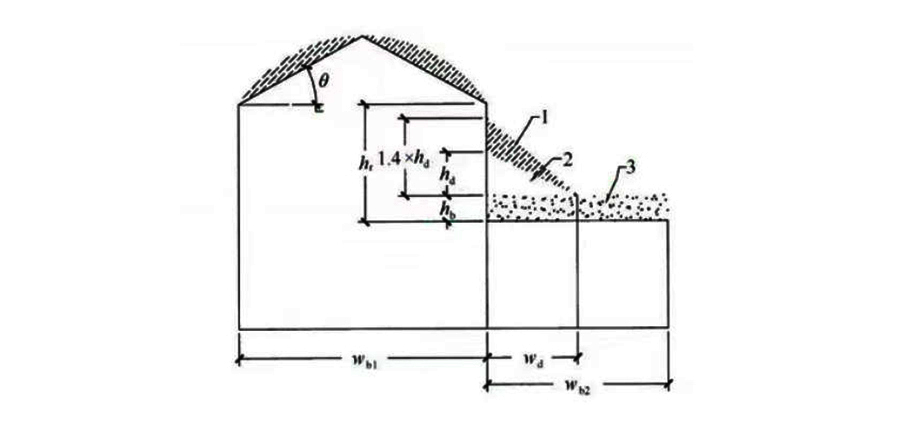
6. Acumulação de neve por deriva (acumulação por vento)
Características da carga
O vento levanta neve de um telhado mais alto ou de terreno aberto e a deposita em um telhado mais baixo próximo à parede alta. Ao contrário da acumulação por deslizamento, este é o resultado da deriva induzida pelo vento.
Considerações de projeto
O comprimento da zona de deriva é normalmente calculado como 5 a 10 vezes a altura de deriva da neve;
A distribuição da carga é trapezoidal ou triangular, com o pico também localizado na base da parede;
A acumulação por deslizamento e a deriva de neve não devem ser sobrepostas; utiliza-se o maior dos dois valores.
Nota sobre possível confusão
Item 5 (acumulação por deslizamento) → acionada pela gravidade (a neve desliza de um nível mais alto);
Item 6 (deriva de neve) → acionada pelo vento (o vento sopra a neve para a área).
Os mecanismos são diferentes; o cenário mais crítico é selecionado para o projeto.
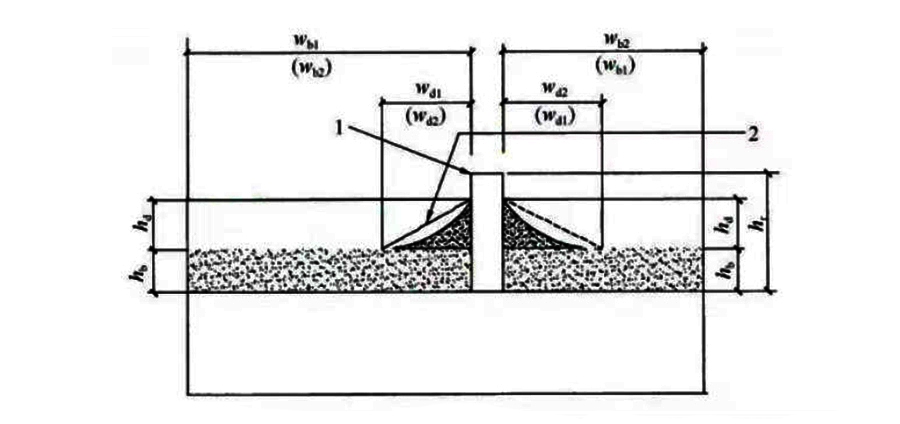
7. Acumulação de neve ao redor de projeções no telhado
Características da carga
Projeções (como dutos de ventilação, bases de equipamentos, saídas de exaustão, etc.) obstruem o deslizamento da neve e a limpeza pelo vento, causando acumulação localizada de neve no lado de barlavento.
Considerações de projeto
As terças dentro de um intervalo de aproximadamente 2–4 m em ambos os lados da projeção requerem reforço;
A altura de acumulação depende das dimensões da projeção e da pressão básica de neve.
O dimensionamento de terças para coberturas leves deve ser verificado utilizando a "distribuição de neve mais desfavorável" em vez de assumir uma distribuição uniforme. As áreas críticas incluem as bases de platibandas, junções entre telhados altos e baixos, calhas de telhado, claraboias e os perímetros de projeções. Cada caso de carga deve ser verificado individualmente, sendo o resultado mais desfavorável a base para o projeto final.
Para mais informações necessárias ou qualquer dúvida, sinta-se à vontade para contatar a equipe Yumisteel.
anos de experiência



 serviço on-line
 +86-592-6095031
 manager@yumisteel.com
 Alina_Yuki
 +8613559086380+8615860744964
 português
 English
 русский
 español
 日本語
日本語